



Microsoft Copilot is now embedded across Microsoft Dynamics 365 Business Central, helping teams automate tasks such as product content creation and financial reconciliation.
This guide focuses specifically on how to enable Copilot and start using it inside Business Central, with clear, step-by-step instructions you can follow in your own environment.
If you are looking to move beyond theory and actually activate Copilot features, this article walks you through:
- Where to enable Copilot in Business Central
- How to configure access for users
- How to use Copilot for real workflows like item descriptions and bank reconciliation
For a broader overview of what Copilot is and how it benefits finance and operations teams, see our guide on how Microsoft Copilot works in Business Central.
Prerequisites Before Enabling Copilot in Business Central
Copilot in Microsoft Dynamics 365 Business Central is only available in supported cloud environments running recent release waves. If you do not see Copilot features, the issue is usually tied to version or deployment type.
What You Need
- Cloud (Business Central Online)
Copilot is not supported in on-premises deployments.
- Current Release Wave (2025 Wave 2 or later)
Copilot features are delivered through Microsoft’s release waves and continue expanding in 2026. Older versions may not include Copilot at all.
- Feature Enablement
Some capabilities are still controlled through Feature Management and may need to be turned on manually, especially preview features.
Quick Check
If Copilot is missing:
- Confirm you are using Business Central Online
- Check your version and release wave
- Review Feature Management for AI-related features
Copilot is updated continuously, with new capabilities such as AI-assisted workflows and agents added through regular releases. Running an outdated version or on-premises environment will prevent access to these features entirely. Keeping your system current ensures you can use the latest Copilot functionality as it becomes available.
Where to Find Copilot in Business Central
AI features in Microsoft Dynamics 365 Business Central are accessed through the Copilot & AI capabilities page, which acts as the central hub for all AI functionality.
To locate it:
- Use the Search (Tell Me) bar
- Enter “Copilot” or “Copilot & AI capabilities”
- Open the page from the results
This page shows:
- All available AI features in your environment
- Their current status (enabled, disabled, preview)
- Which capabilities are available based on your version and setup
If you don’t see this page, your environment likely does not meet the prerequisites (version, cloud, or feature availability).
How to Enable Copilot Features in Business Central
Copilot in Microsoft Dynamics 365 Business Central is built into the system and does not require a single global activation. Instead, administrators enable and manage individual Copilot capabilities based on business needs and user access.
Steps to Access and Enable Copilot Features
- Use the Search (Tell Me) bar in Microsoft Dynamics 365 Business Central
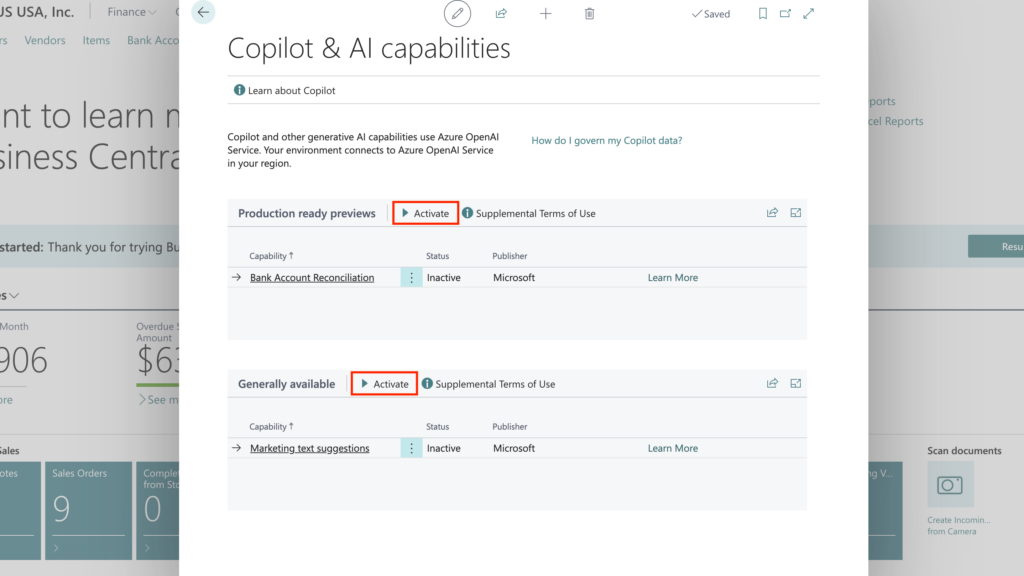
- Type in “Copilot” and click on the search result for “Copilot & AI capabilities.”
- On the Copilot & AI capabilities page, locate the sections for “Bank account reconciliation” and “Marketing text suggestions.”
- To activate Copilot for these features, find the “activate” link under each respective section and click on it.
Assign Copilot Access to Users in Business Central
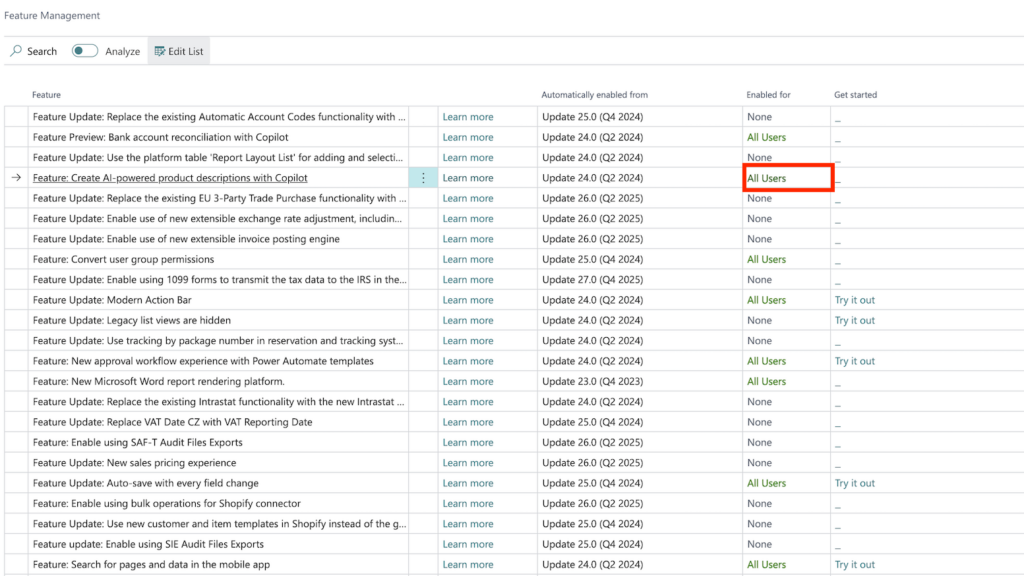
After enabling Copilot features, you can control availability using Feature Management and permissions in Microsoft Dynamics 365 Business Central.
These features do not require separate user activation. Instead, access is determined by user roles and permissions to specific pages and workflows.
In the Feature Management page:
- All Users → Feature is available across the organization
- None → Feature is not available
Creating Item Description with Copilot
With Copilot, you can generate item descriptions in seconds, which is especially useful for ecommerce teams managing large product catalogs. The feature generates product descriptions based on item data such as attributes, categories, and existing fields. You can customize the suggestions to fit your brand’s voice and style, ensuring the content aligns with your brand and product messaging.
Steps to generate item descriptions with Copilot:
- Navigate to the Items list in Business Central.
- Locate and select the item you want to update.
- Confirm that your Item attributes are updated to ensure accurate marketing text generation.
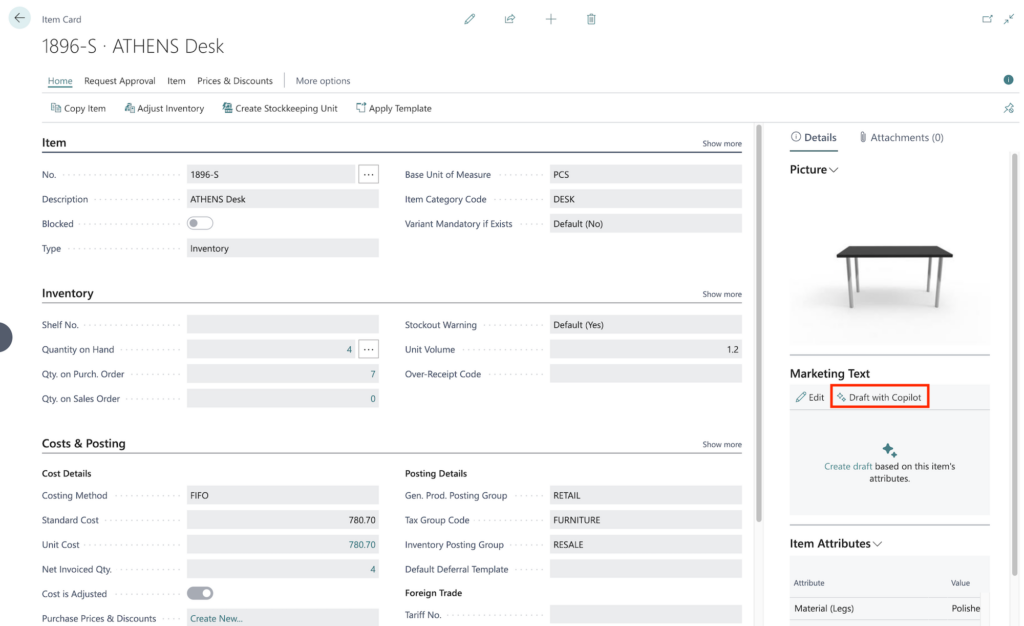
- On the right side, find the section labeled “Marketing Text.”
- Click on “Draft with Copilot.”
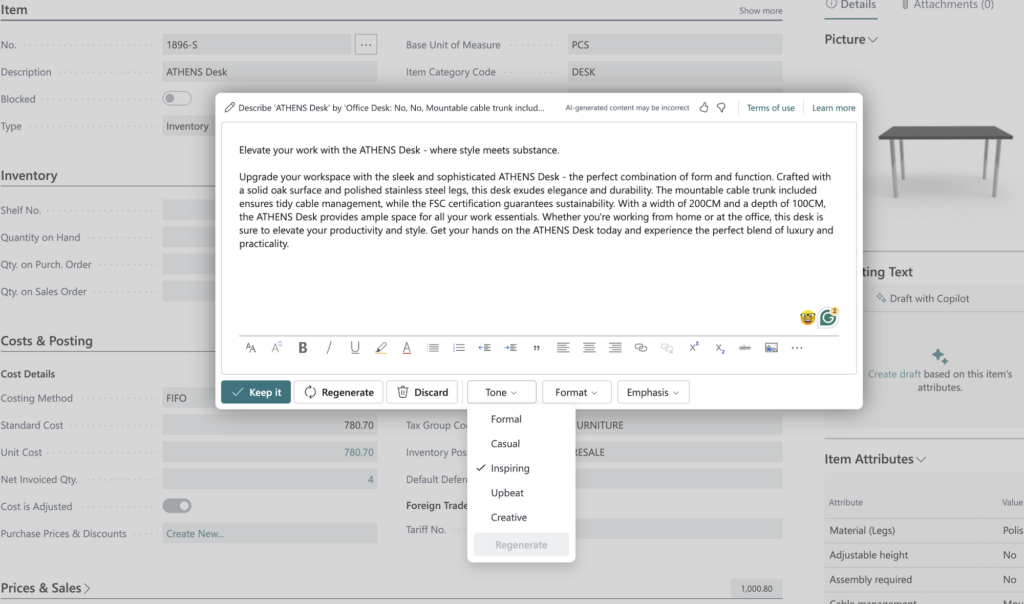
- Select the desired format, tone of voice, and quality of emphasis.
- Click the “Keep it” button to save your change.
Important
Copilot generates a draft based on available data. The output should always be reviewed and adjusted for accuracy, tone, and brand alignment before publishing.
Complete bank account reconciliations using Copilot
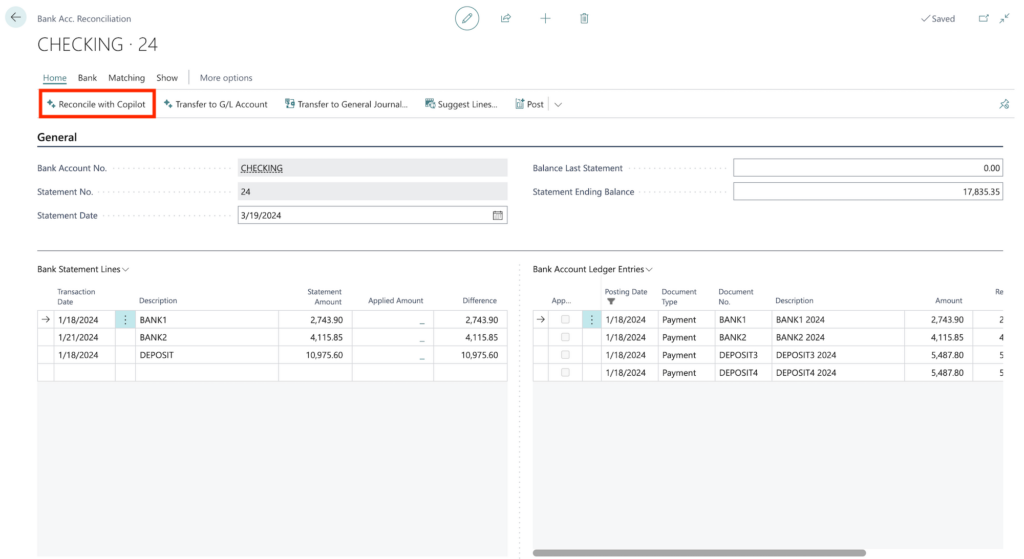
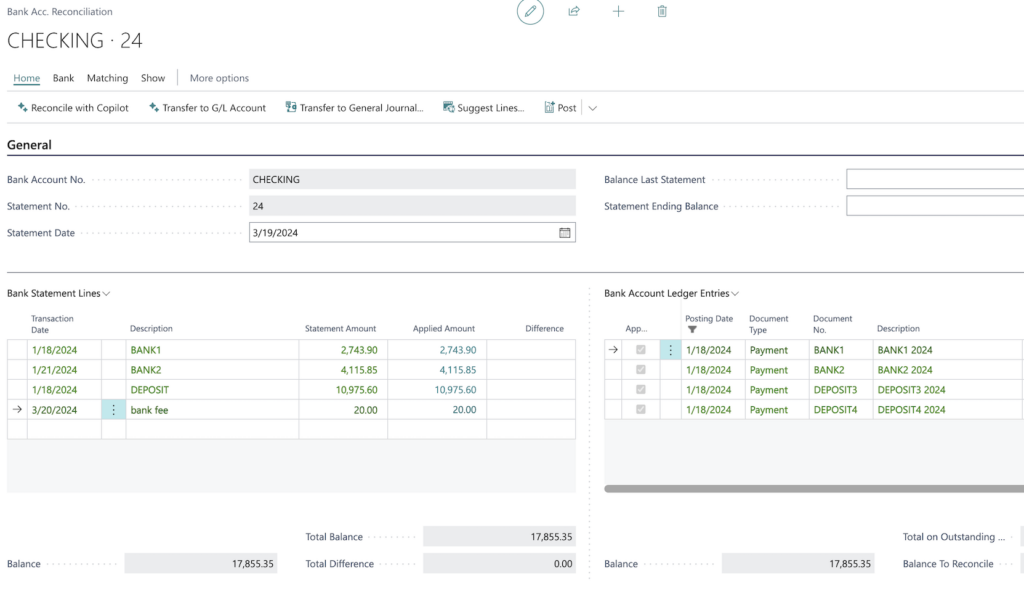
During the bank reconciliation process, it’s crucial to match transactions with ledger entries accurately. Using Copilot can enhance this matching and suggest the appropriate G account for unmatched transactions.
- Go to bank account reconciliation
- Click on the bank account to view unmatched transactions.
- At the top, you’ll see “Reconcile with Copilot” and “Transfer to G Account”.
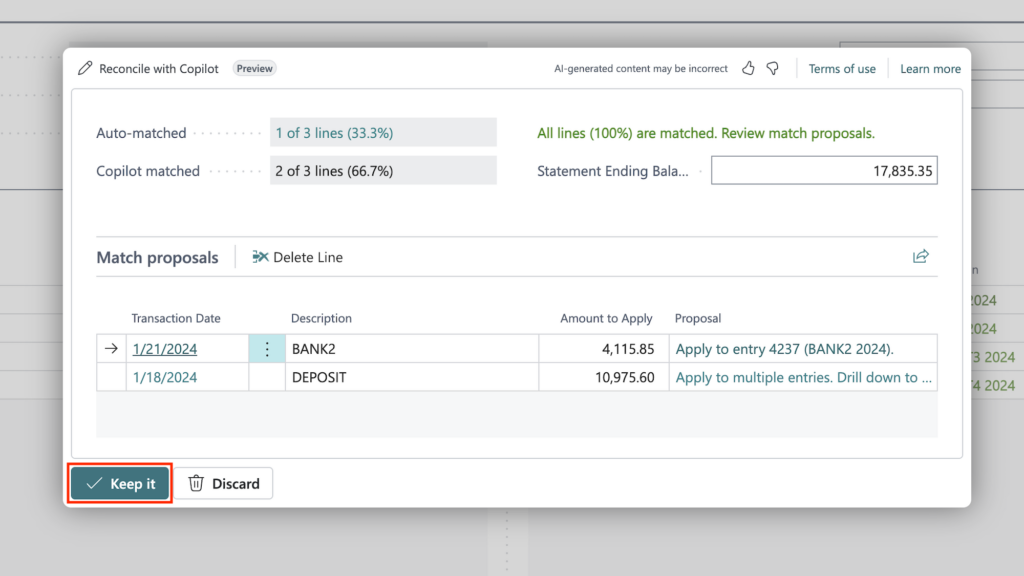
- Click on “Reconcile with Copilot” to use Copilot’s AI technology for better matching.
- The system displays the number of lines that were auto-matched and those matched by Copilot.
- If all matches appear correct, simply click the “Keep it” button to confirm.
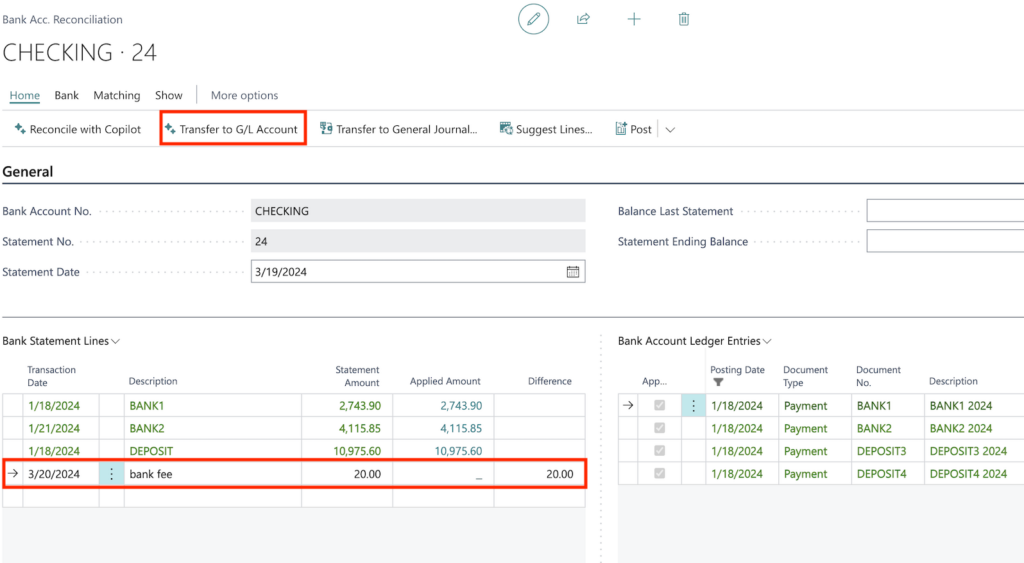
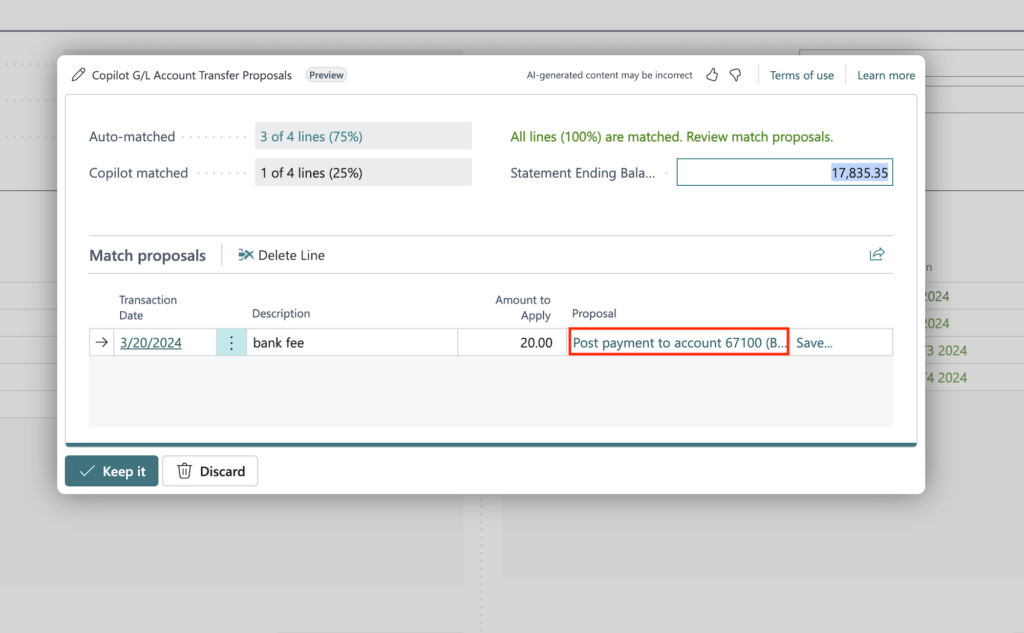
Copilot suggests the ledger account to post for residual transactions and offers to remember specific descriptions for future reconciliations. If you wish to match these transactions as well:
1. Click “Transfer to G/L Account.”
2. Choose the GL account suggested by Copilot under the “Proposal” column.
3. Select “Save” next to the “Proposal” column.
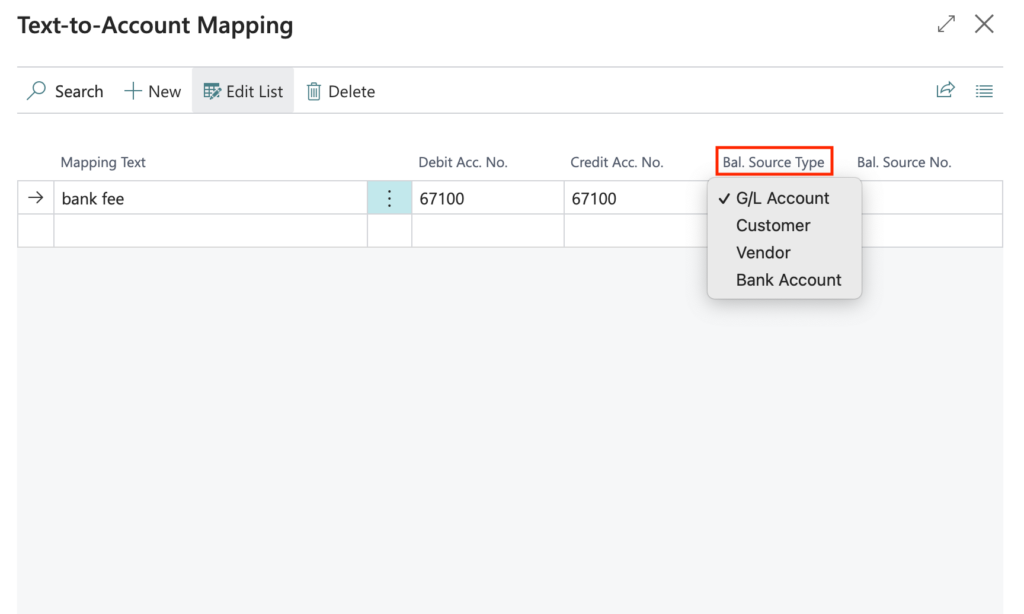
4. Choose the appropriate setting for the balance source type and click “Close.”
5. Click the “Keep it” button to save your new settings.
Common Issues When Enabling Copilot in Business Central
Even after enabling Copilot features in Microsoft Dynamics 365 Business Central, some users may not see or be able to use them. Most issues are related to environment setup, feature activation, or permissions.
Copilot is not visible in Business Central
Possible causes:
- You are using an on-premises environment
- Your system is not on a supported release wave
- Copilot features have not been enabled in Copilot & AI capabilities
How to fix:
- Confirm you are using Business Central Online (cloud)
- Check your version and update if needed
- Go to Copilot & AI capabilities and verify features are enabled
Copilot features are enabled but not showing for users
Possible causes:
- Missing permissions or role access
- User does not have access to the relevant module (Items, Finance, etc.)
How to fix:
- Review user permission sets
- Ensure users have access to the required pages
- Test with an admin or power user account
“Draft with Copilot” or “Reconcile with Copilot” is missing
Possible causes:
- Feature not activated in Feature Management
- Feature still in preview and not fully enabled
How to fix:
- Check Feature Management and confirm the feature is set to Enabled
- Refresh the session or log out and back in
- Verify feature availability for your environment
Copilot suggestions are inaccurate or incomplete
Possible causes:
- Missing or inconsistent data (item attributes, transaction details)
- Limited historical data for pattern recognition
How to fix:
- Improve data quality and completeness
- Ensure item attributes and descriptions are populated
- Review and refine outputs before saving
Copilot is slow or not responding
Possible causes:
- Temporary system latency
- High data volume or complex requests
How to fix:
- Refresh the page or retry the action
- Test with a smaller dataset
- Check Microsoft service status if issues persist
Most Copilot issues in Microsoft Dynamics 365 Business Central are related to configuration, permissions, or data quality. Once these are addressed, Copilot features typically work as expected.
Best Practices After Enabling Copilot in Business Central
After enabling Copilot in Microsoft Dynamics 365 Business Central, it’s important to apply it in a controlled way to ensure accuracy and consistency across your workflows.
Start with low-risk workflows
Begin with tasks such as item descriptions or internal processes where errors have minimal impact. This allows teams to understand how Copilot behaves before using it in financial workflows.
Review AI-generated outputs
Copilot suggestions should always be reviewed before being finalized. This is especially important for financial data, reconciliations, and customer-facing content.
Train teams on proper usage
Ensure users understand what Copilot does and where human validation is required. Clear guidelines help maintain data accuracy and consistency.
Expand usage gradually
Once results are validated, extend Copilot to more complex workflows such as reconciliation, approvals, or reporting.
Tip: If Copilot outputs are inconsistent, review data quality and user permissions before expanding usage.
Conclusion
Copilot in Microsoft Dynamics 365 Business Central is now part of everyday workflows, helping teams reduce manual effort across product content creation and financial reconciliation.
Once Copilot features are enabled, the focus shifts to applying them effectively. Start with simple use cases, validate outputs, and expand into more complex workflows as your team becomes more confident using AI within Business Central.
Because Copilot relies on your data and permissions, maintaining accurate records and proper access control is essential for consistent results.
Need help enabling Copilot in your Business Central environment? Our team can guide setup, permissions, and real-world use cases based on your workflows.
More to read:
Microsoft Dynamics 365 Copilot in Business central can eliminate tedious tasks
Introducing Microsoft Dynamics 365 Copilot
Frequently Asked Questions About Copilot in Business Central
Copilot is an AI capability built into Microsoft Dynamics 365 Business Central that helps automate tasks such as generating item descriptions and assisting with bank reconciliation. It uses your business data to provide suggestions directly within your workflows.
Copilot does not require a single global activation. Instead, you enable individual features through the Copilot & AI capabilities page and Feature Management. Availability depends on your environment, release wave, and configuration
Copilot capabilities are included in supported versions of Business Central, but availability depends on your licensing, region, and enabled features. Some capabilities may still be in preview or require configuration.
No, Copilot is only available in Business Central Online (cloud) environments running supported release waves.

